Femi Pedro: Buhari and the Curious Case of the Young Generation
 Sometime
in 1988, I received a call from a good friend about an interesting
investment opportunity with a few colleagues. After a series of
meetings, it became very clear to me that we were about to embark on an
audacious but incredibly special journey, and I was excited about the
prospect of being a part of such a project. For almost 2 years, I worked
alongside the likes of Akin Akintoye, Fola Adeola, Tayo Aderinokun (of
blessed memory), Gbolly Osibodu, Bode Agusto and a few others on this
investment project. As of 1988 when we began the journey, Fola was 34,
Tayo was 33, Gbolly was 33, Bode was 33, Akin was 35 and I was 33. The
objective: To own a BANK.
Sometime
in 1988, I received a call from a good friend about an interesting
investment opportunity with a few colleagues. After a series of
meetings, it became very clear to me that we were about to embark on an
audacious but incredibly special journey, and I was excited about the
prospect of being a part of such a project. For almost 2 years, I worked
alongside the likes of Akin Akintoye, Fola Adeola, Tayo Aderinokun (of
blessed memory), Gbolly Osibodu, Bode Agusto and a few others on this
investment project. As of 1988 when we began the journey, Fola was 34,
Tayo was 33, Gbolly was 33, Bode was 33, Akin was 35 and I was 33. The
objective: To own a BANK.
It was a
bold objective considering our respective ages at the time, but
certainly not an impossible task in our eyes. So we began to hold
countless meetings at Fola’s residence in 1988, until we eventually
shifted base to Tayo’s First Marina Trust office in Victoria Island. By
late 1989, we were ready to put in our bank application at CBN, along
with the required minimum capital. This effort was spearheaded by Fola
and Tayo (the two brains behind the entire operation), and supported by
about 40 persons (including myself), most of whom were in their early
30s and working for different organizations at the time. The end
product? We formed arguably one of the finest financial institutions
Nigeria has ever seen- Guaranty Trust Bank (known as GT Bank today). The
bank was licensed on the 1st of August, 1990 and we commenced banking
operations later that year. A group of young boys in their early/mid 30s
OWNED a bank! We simply dreamt big, and turned this dream into reality.
I
am taking the liberty to reflect on this chapter of my personal history
against the backdrop of some of the criticism about the ages of some of
President Muhammadu Buhari’s ministerial nominees. The argument being
brandished about is that by nominating the likes of Chief Audu Ogbeh and
Alhaji Ibrahim, Usman Jubril as ministers, our President is somehow
blocking the destinies of younger Nigerians by preventing them from
occupying such positions. People are quick to reference Yakubu Gowon and
Murtala Mohammed as being relatively young when they ascended to power,
and they argue that the same opportunities that young people had in the
past are no longer available today. They also argue that around the
same time we were forming GT Bank in the late eighties, there were also a
number successful young entrepreneurs who distinguished themselves as
well – Bola Tinubu (Treasurer at Mobil Oil), Gbade Ojora (ED Mobil Oil),
Jim Ovia (Zenith Bank), Erastus Akingbola (Intercontinental), Dele
Momodu (Publishing), Tony Elumelu (Standard Trust), Liyel Imoke
(Politics), O’tega Emerhor (Standard Alliance Insurance), Aig Imoukhuede
and Herbert Wigwe (Access) and Atedo Peterside (IBTC) are some of the
noteworthy youngsters who made an impact in various fields in Nigeria at
the time.
Perhaps, at play is the
venting of some on-going frustrations by the younger generation today,
but it is important to put things into proper perspective. Since
pre-independence, the Nigerian youth have played a pivotal role in
nation-building and economic development. The vast majority of the
founding fathers that led the struggle for our independence were
relatively young. Chief Obafemi Awolowo was 37, Akintola was 36, Ahmadu
Bello was 36, Balewa was 34 and Enahoro was 27 when they led the
struggle for independence after the death of Sir Herbert Macaulay. Only
Nnamdi Azikiwe was over 40 (he was about 42 at the time). Indeed, even
the post-independence military hierarchy was fueled by the active
participation of young persons in nation-building at critical periods of
our nation’s history. The first coup in 1966 was led by a 29 year-old
Nzeogwu and countered by the likes of T.Y. Danjuma, Shehu Musa Yar’adua
and a few others, all in their 20s. The subsequent coup brought a 32
year-old Yakubu Gowon into power. Many of the military administrators
who governed the states under successive military governments (including
our current president, Muhammadu Buhari) were in their 30s. Similarly,
the major beneficiaries of Nigerian indigenization policies in the early
70s were young private sector entrepreneurs. The likes of Subomi
Balogun, Oladele Olasore, Sam Asabia blazed the trails in banking at
relatively young ages, while super civil servants such as Allison
Ayida, Phillips Asiodu, Ahmed Joda, Ime Ebong, Ibrahim Damcida etc held
forth in public administration in their early 30s. This trend of young
people playing active roles in nation building and economic activities
continued well into my own generation in the 1980s and 90s, so it is not
difficult to understand how we were able to muster the courage and
determination to forming a bank at the time.
I
have spent a lot of time mentoring, observing and interacting with
young Nigerians. Today’s youth are no different from those of my
generation about 30 years ago. They are faced with the same pressures,
frustrations, uncertainties and life vicissitudes that we faced in our
late twenties and early thirties. However, the marked difference is how
young Nigerians apply themselves today. Most of us who made an impact in
our early thirties came from modest means. We were not rich, and we did
not have any noteworthy inheritance. Nobody did us any favours, and the
older generation did not give us a pass or a nudge in the right
direction. In fact, the military administrations at the time made it
extremely difficult for us to participate optimally in business,
governance and politics. We did not have social media, and there was no
technology to aide our goals. We were simply big dreamers determined to
make a difference. We were highly enlightened and career-oriented, so we
were able to force our way through the door by working extremely hard.
What some of the proponents of the argument against the older
ministerial nominees, (and perhaps the older generation currently
dominating the political and economic landscape) also fail to realize or
remember is that even in my early thirties, we also had very
established and older industrialists like MKO Abiola, Sam Asabia,
Gamaliel Onosode etc, who all operated during our time. We respected
them, but neither felt overwhelmed by their success, nor daunted by the
prospects of climbing up the ladder. We simply forged ahead with our
plans and damned the consequences. The point is nobody cleared the way
for us back then, so young Nigerians today should not expect that anyone
would clear the way for them either.
So
what exactly needs to change amongst young Nigerians today? First,
young Nigerians have to humble themselves. You have to be willing to
learn the ropes and hone your craft. Around the age of 27, I left the
relative comfort of a steady career at CBN to learn under the tutelage
of Otunba Subomi Balogun, the visionary and pioneer behind FCMB. Working
as Otunba Subomi Balogun’s executive assistant was an experience of a
lifetime. He was (and still is) a well-organized and thorough
individual. He strongly promoted excellence and perfection, and did not
condone indolence, laziness or poor quality work. He was also an
impeccable dresser, always elegantly attired in all-white traditional
wear or perfectly tailored quality suits. I picked up these virtues and
adopted his style of leadership and management in my future endeavors. I
was opportune to travel with him to attend corporate and other board
meetings. I gained valuable and practical experiences in corporate board
management and boardroom politics, which became useful tools later in
my career.
Secondly, you must know
your worth. Do not settle for less, and do not allow yourselves to be
used by selfish political interests. Challenge the status-quo. Challenge
the establishment. The youth make up a sizeable portion of the Nigerian
populace. By extension, they have the loudest voices and the biggest
potential. Alan Moore, a prominent British author opined that “People
shouldn’t be afraid of their government. Governments should be afraid of
their people”. This is especially true with regards to young Nigerians.
You are more powerful than you give yourselves credit for. Our current
president was victorious in large part due to the votes cast by young
Nigerians, and you must continue to remind yourselves of this fact,
because 2019 is already fast approaching.
Thirdly,
and crucially, young Nigerians have to eliminate distractions. Do not
get carried away by the allure of good living, bling, fame and fortune.
Stay on the straight-and-narrow path. Distractions are the proverbial
pot-holes; they slow you down from reaching your destination and damage
your wheels in the process. By all accounts, social media is obviously
the biggest distraction. It is a powerful tool, but can also derail you
from focusing on the bigger picture. The most discerning amongst you
will know how to navigate social media without hindering your ability to
make significant inroads in the economic and political fabric of
Nigeria. I have been impressed with what the likes of Linda Ikeji,
BellaNaija, Don Jazzy, TY Bello, Jimi Mohammed, Banke Meshida-Lawal and
other young Nigerians have been able to accomplish at such a young age,
and it should serve as an inspiration to other young Nigerians in
various fields as well.
Finally, take advantage of opportunities,
no matter how small or inconsequential they may be at the time. Expect
no helping hands. And when these opportunities present themselves, grab
what you can. During our cabinet meetings, my boss and mentor, Asiwaju
Bola Ahmed Tinubu always quipped that “Power is never served
a-la-carte”. This is indeed true in the context of where young Nigerians
currently are, and where they need to be.
Our
nation is at a critical crossroads. The age bracket between 18-35 years
constitutes the majority of our working population group, and
naturally, they should be the most productive and active segment of our
country’s economic activity and nation-building efforts. Unfortunately,
the youth of today are indolent, unemployed and generally incapacitated.
Some are unable to make ends meet, and have not shown any sustained
interest in holding leadership position. They abstain from holding
governance positions at the local, state and national levels. Ironically
and confusingly, they allow themselves to be used as street (and very
recently, internet/online) thugs, miscreants and protesters to pursue
the selfish agendas of older politicians.
Despite all of this, I have a lot of faith in the youth of today, but young Nigerians need to start having faith in themselves as well. You need to wake up from your slumber, and pilot the much-needed change process urgently. You must be willing to side-step all the pit-fall distractions and refocus your collective mindsets. You have to be guided by a desire to excel, and you must continue to push yourselves to grow in a tough, competitive and cut-throat environment that still exists today. Who knows? With a bit of conviction, commitment and guile, you may be able to produce a young, vibrant and dynamic Nigerian as our President much sooner than you think!
___________________________________________________________________________________
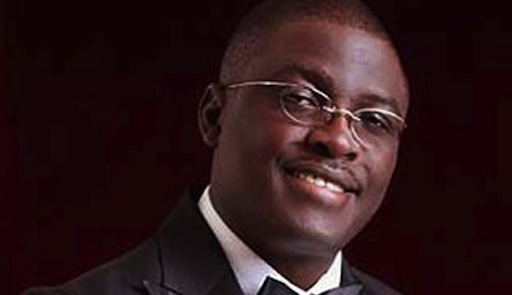
Otunba Femi Pedro is a Banker and an Economist. He is a former Deputy Governor of Lagos State, and the former Managing Director of First Atlantic Bank (FinBank) Plc. He can be reached via the Twitter Handle: @femipedro
Despite all of this, I have a lot of faith in the youth of today, but young Nigerians need to start having faith in themselves as well. You need to wake up from your slumber, and pilot the much-needed change process urgently. You must be willing to side-step all the pit-fall distractions and refocus your collective mindsets. You have to be guided by a desire to excel, and you must continue to push yourselves to grow in a tough, competitive and cut-throat environment that still exists today. Who knows? With a bit of conviction, commitment and guile, you may be able to produce a young, vibrant and dynamic Nigerian as our President much sooner than you think!
___________________________________________________________________________________
Otunba Femi Pedro is a Banker and an Economist. He is a former Deputy Governor of Lagos State, and the former Managing Director of First Atlantic Bank (FinBank) Plc. He can be reached via the Twitter Handle: @femipedro


No comments:
Post a Comment